
Host and Share Video Marketing at Enterprise Scale
Host, share, and manage video marketing content in one place so teams deliver campaigns, events, and collateral with consistent access and brand control.


Centralized video hosting
Host campaigns, webinars, demos, and interviews in one place so teams share content reliably and capture viewer intent during playback.

Controlled sharing with context
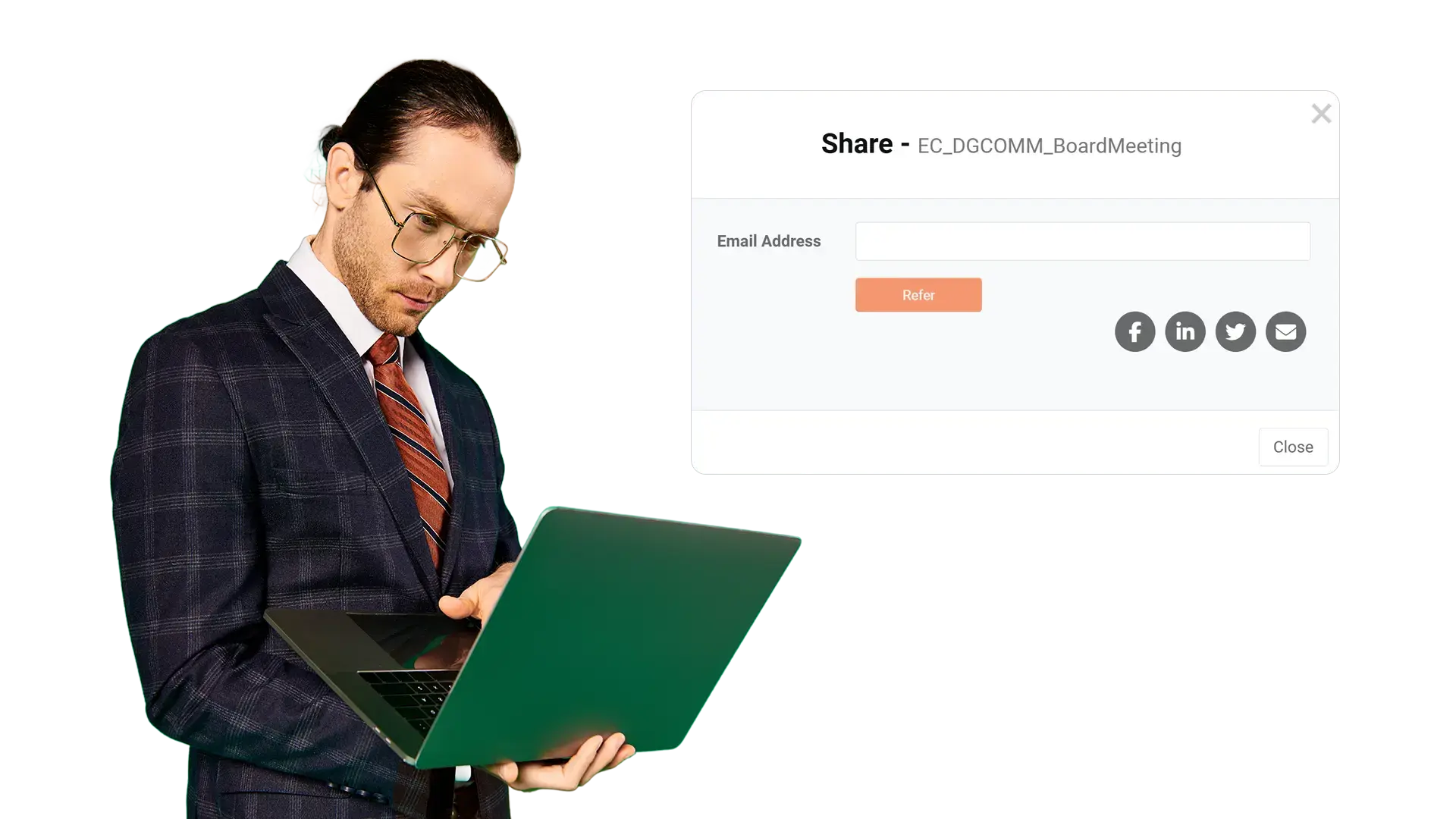
Share videos and segments with clear context so reviewers approve faster and teams share with confidence.

Live, on-demand video
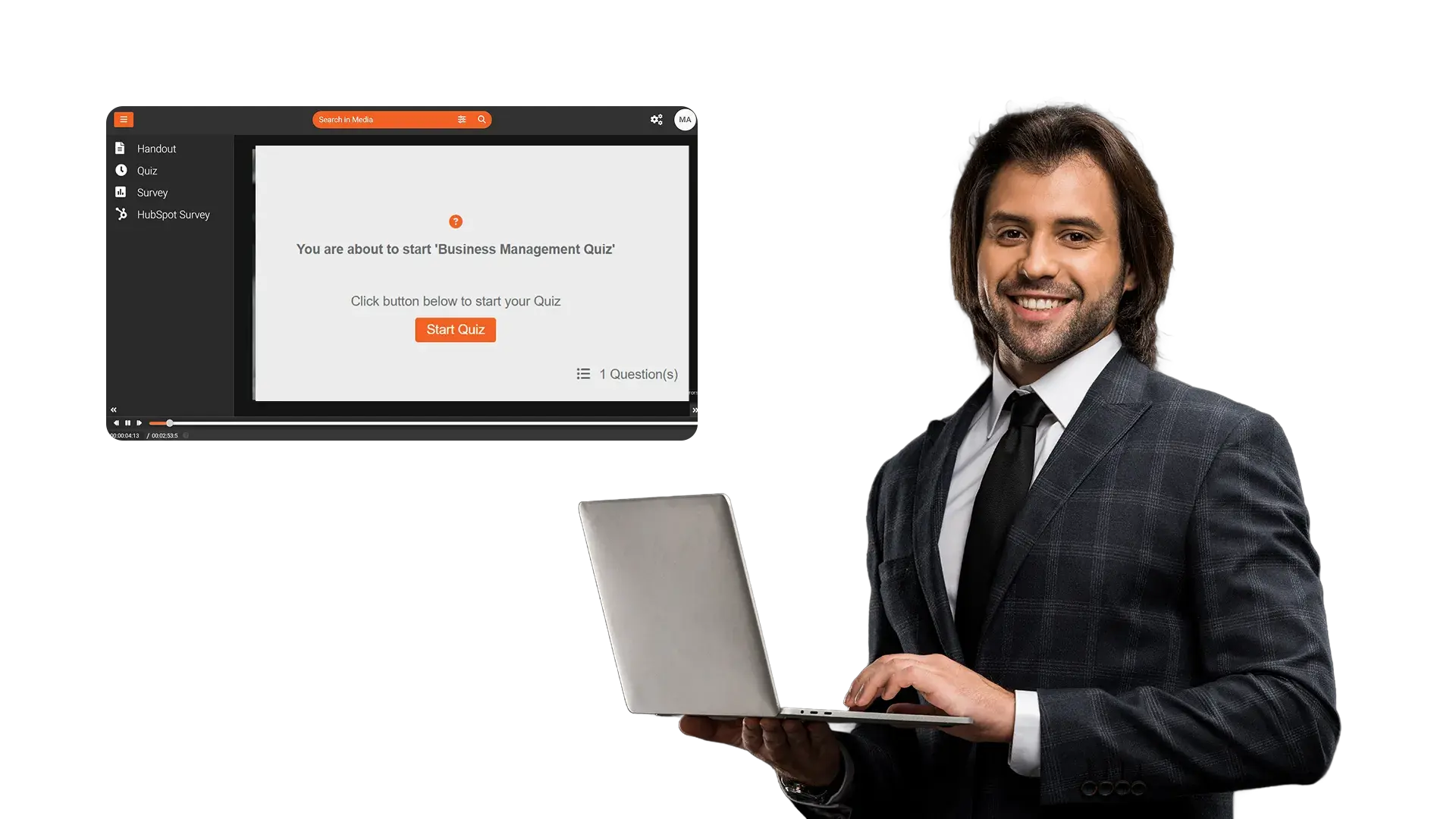
Support live and on demand video with chapters, highlights, quizzes, surveys, handouts, forms, and engagement metrics.

Approvals and brand control
Control who can view, share, and repurpose assets so content stays aligned with brand and policy.

Ingest
Upload videos from campaigns, webinars, demos, and interviews, then organize assets by launch, product, and audience.

Organize
Organize content by campaign, product, and audience so teams know what to share and where.

Review
Route videos for review and approval, then publish interactive experiences with quizzes, surveys, handouts, and forms teams know are ready to share.

Share
Share approved videos across teams, regions, and partners with clear visibility into status and performance.
Marketing Communications
Host brand videos and announcements with controlled sharing, interactive elements, and fast playback across devices.- Publish videos to brand portals and pages with controlled links for each audience
- Add quizzes, surveys, handouts, and forms to drive action during playback
- Track views, engagement, and drop off to improve the next release

Demand Capture
Turn video into a lead capture channel by embedding forms in video, securing embeds, and measuring conversions.
- Insert forms at the right moment to capture MQL details during viewing
- Embed media securely on landing pages and partner pages without exposing source files
- Use performance signals to refine hooks, CTAs, and follow up sequences

Live and On Demand Events
Run webinars and virtual events with live interaction, then publish recordings to gated portals for ongoing demand.- Host live sessions with chat and Q and A, then publish recordings for on demand viewing
- Add surveys and handouts to collect feedback and share resources during the session
- Measure attendee engagement, completion, and drop off to improve future events
Targeted Sharing
Deliver invite only content to specific accounts, regions, and partners with controlled access and clear status.- Create invite only portals for key accounts, partners, and communities
- Control access and sharing so content stays aligned with each audience
- Keep versions clear so teams share the current asset set for each campaign wave
Performance and Optimization
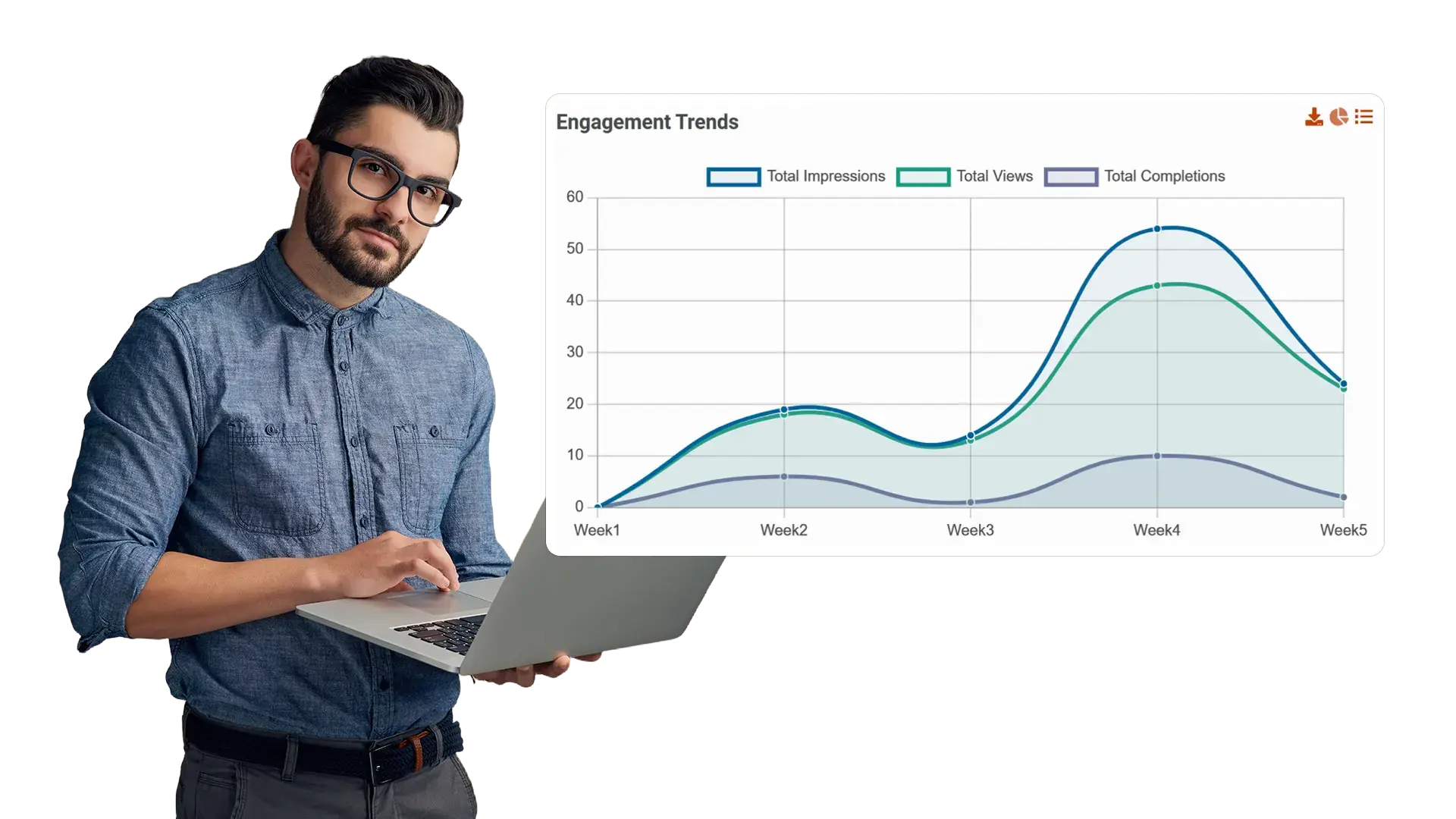
Use media analytics to understand what works, then optimize distribution, creative, and follow up.
- Review engagement trends and viewer behavior to spot drop off points
- Compare performance by audience and channel to refine targeting
- Republish improved cuts and CTAs based on what viewers complete and click
Brand Control and Embeds
Deliver a branded viewing experience and secure embeds so videos match your identity across sites and portals.
- Apply logo, colors, typography, and portal layout to match brand guidelines
- Embed media securely across websites and portals with controlled sharing
- Use portals and collections to present campaign collateral in a clear journey


Video as file storage
Reuse without sourcing
Governance after sharing

Video as shared marketing asset
Faster approvals with traceability
Governance at publish time
Bounded access
Audit ready traceability
Aligned with review workflows
Controlled automation
Frequently Asked Questions
A video marketing platform is software that lets marketing teams host, share, distribute, and measure video content for campaigns, webinars, demos, and brand communications from a single hub. It combines centralized hosting, interactive elements like in video forms and quizzes, brandable players and portals, secure embeds, and engagement analytics so teams run video campaigns with control instead of scattered links and drives.
You use video for lead generation by embedding forms, quizzes, and call to action elements directly inside the video so viewers can convert during playback. Marketing teams place forms at high intent moments, embed the video securely on landing pages, and use engagement data to refine hooks, CTAs, and follow up sequences based on what viewers actually complete.
Marketing videos are hosted and shared securely by applying role based access controls during search, sharing, and embedding, so only authorized audiences can view each asset. Teams publish to brand portals, embed media securely on websites without exposing source files, and use invite only portals for partner or account specific content.
You measure video marketing performance using engagement rate, completion rate, drop off points, and viewer behavior across audiences and channels. These signals show which hooks land, where viewers disengage, and which CTAs convert, so marketing teams can compare performance by audience, refine creative, and republish improved cuts based on real viewing behavior.
You turn webinars into ongoing demand generation by publishing recordings to gated portals where prospects can watch on demand and convert through embedded forms. Live sessions capture initial engagement through chat, Q and A, surveys, and handouts, then the recording continues generating leads through searchable libraries, embedded CTAs, and engagement tracking that informs follow up.
A video marketing platform offers brand control, secure embeds, role based access, lead capture inside video, and enterprise analytics that public platforms like YouTube and Vimeo do not provide. Marketing teams get a fully branded viewing experience without competing recommendations, control over who can view and share each asset, and conversion data tied to specific accounts and audiences instead of anonymous public view counts.
